Dreaming about fresh eggs, a big garden, or a horse in the pasture? In Goldsby, that dream can be very real, but acreage is not all the same. If you are planning a small hobby farm, a little upfront homework can save you time, money, and frustration later. This guide walks you through the key land, water, access, and planning details to think about before you buy or build. Let’s dive in.
Start With the Parcel Location
One of the first things to confirm is whether the property is inside the Town of Goldsby or in unincorporated McClain County. That single detail can shape what rules apply to your land, what permits you may need, and how simple your plans will be.
Inside Goldsby, land use is guided by the town’s zoning framework. Goldsby has fifteen zoning districts, and its Agricultural-Residential A-1 district is the largest. The town’s comprehensive plan says A-1 is intended to preserve land for agricultural and related uses, prevent premature suburban development, and avoid excessive utility extensions, with a minimum lot size of 5 acres.
In unincorporated McClain County, the county states that it does not have a zoning code. Even so, that does not mean you can skip due diligence. The county still requires floodplain permits in unincorporated areas, and it has separate application processes for road connections and road crossings.
Goldsby Acreage Is Not One-Size-Fits-All
Goldsby includes both rural character and active parcel-level review. The town’s forms and documents include applications for rezoning, subdivision, building permit review, floodplain development, road bore work, and Goldsby Water Authority service. That is a good reminder to verify the exact status of a specific parcel before assuming a hobby-farm setup will be simple.
Goldsby’s comprehensive plan also identifies a large rural residential land-use area of more than 1,937 acres, or 11.9 percent of the town’s land area. That supports the area’s acreage appeal, but it also shows why buyers need to look at the exact parcel and not just the mailing address.
If you are considering changing how a property is used, ask early about the local process. Goldsby’s rezoning form shows that a formal site plan and notice to neighboring owners can be part of a land-use change request.
Plan Your Hobby Farm Layout Early
A good hobby farm usually starts on paper before it starts on the ground. Oklahoma State University recommends sketching the property before building out your layout. That step helps you think through where your garden, pasture, barn, poultry area, and drive access should go.
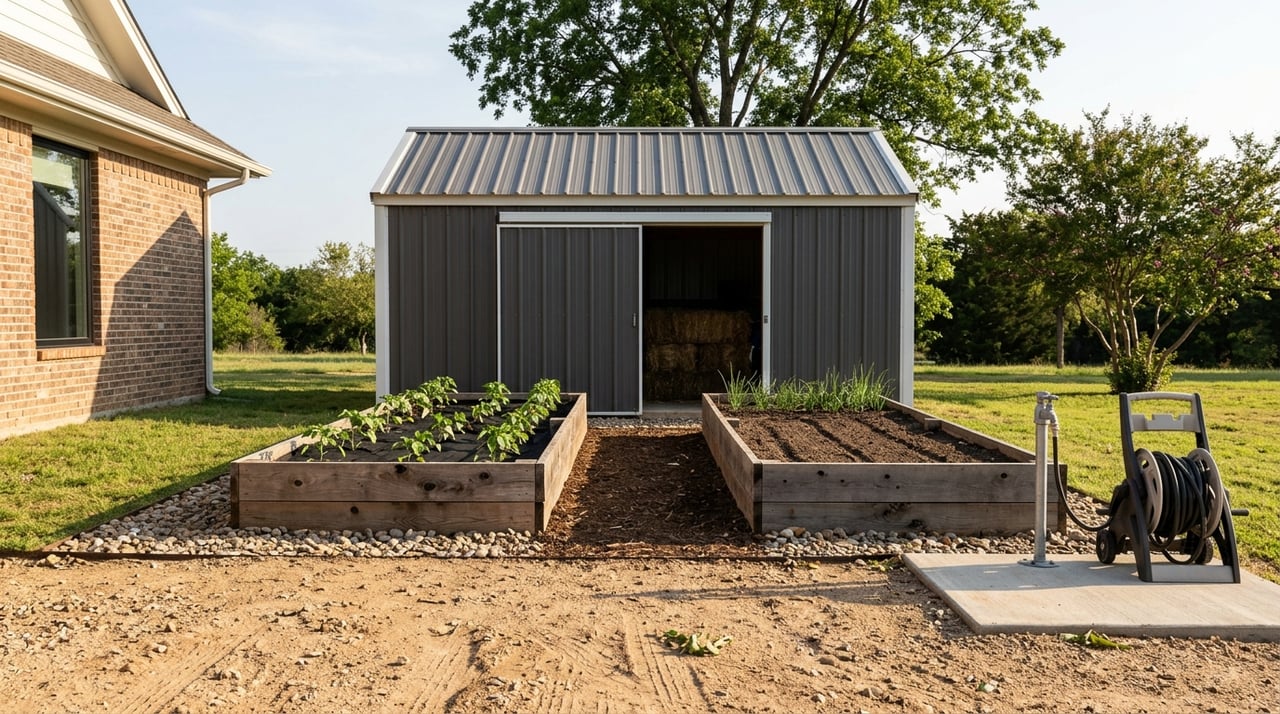
For gardens and food plots, OSU recommends choosing a site with full or near-full sun, deep well-drained fertile soil, and access to water. If part of the property stays wet or the native soil is too sandy or heavy with clay, raised beds or containers may work better.
If you use raised beds, OSU recommends orienting them north-south and placing taller crops on the north side. That helps prevent taller plants from shading shorter ones.
Garden Space Tips for Goldsby Acreage
When you walk acreage, try to picture how the land works in different seasons. A beautiful open area in winter may stay soggy after spring rains, and a flat patch near the house may be easier to water than a larger space farther away.
It also helps to think beyond just planting space. You may want room for compost, tool storage, wash areas, and clear paths for hauling supplies. A practical layout often makes daily chores easier than simply picking the largest open patch of ground.
Test Soil Before You Invest
Soil testing is one of the smartest first steps for a small hobby farm. OSU says a soil test identifies the nutrients and pH adjustments your site actually needs. That can help you avoid wasted fertilizer and reduce unnecessary runoff.
This matters whether you want a garden, a small orchard, or improved pasture. Rather than guessing, you get a clearer picture of what the land needs and what it may cost to improve.
OSU’s water-wise landscape guidance also stresses planning, mulch, efficient irrigation, and appropriate plant selection because Oklahoma rainfall is variable. In other words, your land plan should match local conditions instead of assuming every acre will perform the same way.
Think Carefully About Animals on Small Acreage
A hobby farm can mean very different things to different buyers. For some, it is a large garden and a few chickens. For others, it includes horses, small livestock, or a mix of uses. The right parcel depends on the type of setup you want and how much time and infrastructure you are ready to manage.
McClain County has deep agricultural roots. The USDA 2022 county profile shows 1,121 farms, 236,168 acres in farms, 69 percent of agricultural sales from livestock, poultry, and products, and 126,281 acres of pastureland. That local context supports acreage living, but it does not replace parcel-specific planning.
Horses Need a Management Plan
If horses are part of your dream, acreage size alone does not guarantee an easy setup. OSU notes that small-acreage horse farms are difficult to manage as straight pasture because horses overgraze quickly. On smaller tracts, controlled grazing, rotational cells, or dry-lot areas may work better when the land base is too limited for dependable forage.
More paddocks can improve forage use, but OSU also notes that they increase fencing, water needs, and labor. That is why horse property should be evaluated for layout and infrastructure, not just total acreage.
Poultry Needs More Than a Coop
Backyard poultry also takes more planning than many buyers expect. OSU recommends checking city ordinances or HOA restrictions, confirming feed access, and thinking through time commitment and neighbor impact before adding birds.
OSU’s backyard poultry guidance also treats housing, nutrition, biosecurity, and disease prevention as core planning items. If poultry is on your wish list, it helps to decide early where birds would be housed and how that use fits with the rest of the property.
Water Can Make or Break the Property
On acreage, water is often one of the biggest practical questions. Goldsby’s comprehensive plan says the town water system is supplied by water towers and underground wells and serves both the town and some areas beyond town limits. The town also maintains a Goldsby Water Authority.
At the same time, the plan notes resident concerns about low water pressure and infrastructure capacity. That makes it important to confirm not just whether service exists, but how well it serves the parcel you are considering.
If a property relies on a private well, Oklahoma Water Resources Board guidance is important. OWRB says domestic household wells, livestock use up to the land’s grazing capacity, and irrigation of less than 3 acres do not require groundwater use authorization, while public water supply, commercial use, poultry operations, and irrigation of more than 3 acres do.
OWRB also states that historical use is not automatic protection. A previous owner’s water use does not automatically create water rights for a new owner.
Questions to Ask About Water
Before closing on acreage, it helps to ask practical questions such as:
- Is the property on public water, a private well, or both?
- If public water is available, what is the service status and expected pressure?
- If there is a well, what is it currently used for?
- Will your planned garden, livestock, or irrigation stay within domestic-use limits?
- If you want a larger irrigated area or commercial-type use, what approvals would be needed?
Septic and Drainage Deserve Early Attention
Septic system due diligence is just as important as water. The Oklahoma Department of Environmental Quality says the Report for On-Site Sewage, often called the 581, determines what on-site system types are allowed for a property. DEQ also says an Authorization to Construct is required before a new system is installed or an existing one is modified.
The key point is that soil profile and lot characteristics determine what system options are allowed. If you are buying raw land or planning to expand improvements, septic feasibility should be part of your early review, not an afterthought.
Floodplain and drainage also matter in this part of the county. McClain County participates in the National Flood Insurance Program, and Goldsby’s comprehensive plan treats floodway areas along the Canadian River as unsuitable for significant residential, commercial, or industrial development and more appropriate for agricultural, open-space, and recreational uses.
That does not mean floodplain land has no value. It does mean you should understand how floodplain location affects building plans, insurance considerations, and where you place barns, fencing, gardens, or homesites.
Access, Driveways, and Utility Crossings Matter
Many buyers focus first on acreage size, views, and improvements. But daily function often comes down to access. If you need a new drive, utility bore, or road tie-in, McClain County has separate road connection and road crossing application processes.
That matters because your hobby farm has to work in real life. Feed deliveries, trailers, equipment, fencing materials, and service vehicles all depend on safe, legal access to the property.
When you tour land, notice where the current entrance sits, how wide it is, and whether it supports your planned use. A pretty gate is nice, but usable access is what keeps a rural property practical.
Do Not Assume Agricultural Tax Treatment
Taxes are another area where buyers should verify facts early. The McClain County Assessor handles ad valorem valuation, maintains permanent property records, reviews exemption applications, and performs a four-year visual inspection program.
Oklahoma tax rules say agricultural land is assessed under use-value rules tied to actual use and soil data. For a small hobby farm, that means you should not assume agricultural treatment just because a property has a few animals, a pasture, or garden beds.
Instead, confirm the current classification and likely tax treatment with the county assessor before you buy. That simple step can help you set realistic ownership costs from day one.
A Smart Goldsby Hobby Farm Checklist
If you are narrowing down acreage in Goldsby or the 73093 area, keep this short checklist in mind:
- Confirm whether the parcel is inside Goldsby or in unincorporated McClain County
- Check zoning, land-use status, and any parcel-specific review requirements
- Review floodplain and drainage conditions early
- Verify water source, service quality, and any well-use limits
- Investigate septic feasibility and system status
- Ask about driveway, road connection, and utility crossing needs
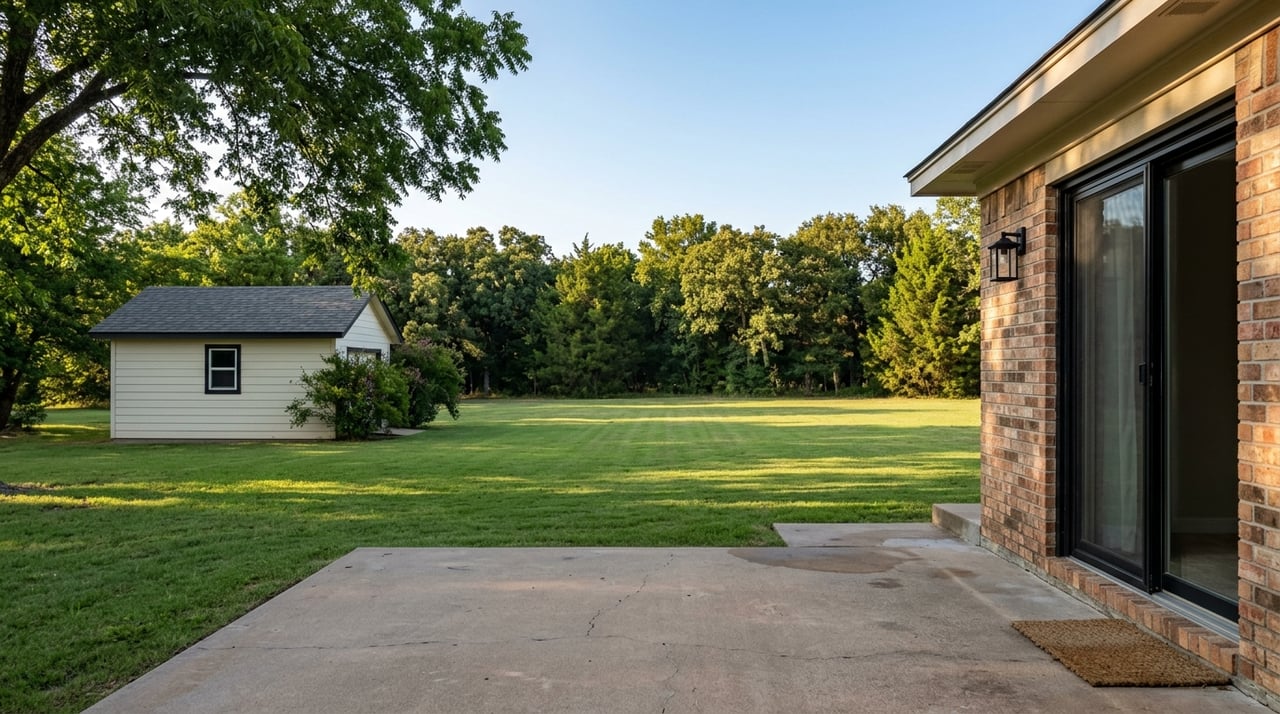
- Evaluate whether barns, fences, and sheds are usable as-is
- Match the land layout to your garden, pasture, poultry, or horse plans
- Confirm current tax classification with the county assessor
Local Knowledge Matters on Acreage
Buying land for a small hobby farm is exciting, but it is also a detail-driven process. In Goldsby, one parcel may be a great fit for gardens and a few animals, while another may come with water, floodplain, access, or land-use hurdles that change the picture.
That is why local guidance matters. When you understand the town-versus-county distinction, the water and septic questions, and the real layout needs of your planned use, you can shop with more confidence and fewer surprises.
If you are looking at acreage in Goldsby or anywhere in McClain County, Than Maynard can help you think through the practical details that matter before you make a move.
FAQs
What should you check first on acreage in Goldsby for a hobby farm?
- First, confirm whether the parcel is inside the Town of Goldsby or in unincorporated McClain County, because that affects zoning, permits, and land-use review.
What is the minimum lot size in Goldsby’s A-1 district?
- Goldsby’s comprehensive plan lists a minimum lot size of 5 acres in the Agricultural-Residential A-1 district.
What water questions matter most for a hobby farm in Goldsby?
- You should verify whether the parcel has public water, a private well, or both, and confirm service quality, pressure, and whether your planned use fits Oklahoma water rules.
What septic step matters before building on McClain County acreage?
- DEQ says the Report for On-Site Sewage, often called the 581, determines what on-site sewage system types are allowed for the property.
What should horse buyers know about small acreage in McClain County?
- OSU says small-acreage horse farms often need controlled grazing, rotational cells, or dry-lot areas because horses can overgraze pasture quickly.
What should poultry buyers verify before adding chickens on Goldsby acreage?
- OSU recommends checking local ordinances or HOA restrictions, confirming feed access, and planning for housing, nutrition, biosecurity, and disease prevention.